
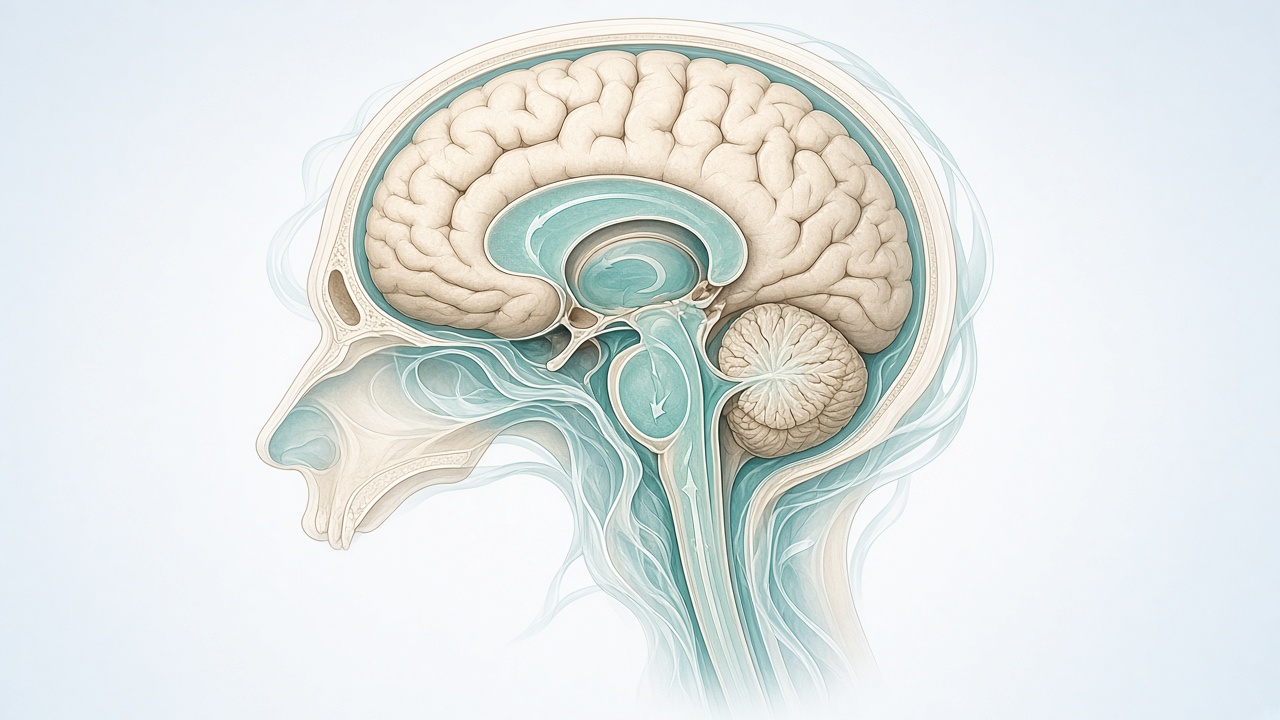
Low pressure
Pain often peaks within minutes of standing and settles when lying flat. Neck pain, nausea, and a rushing sound may accompany it. Contrast MRI sometimes shows meningeal enhancement or brain sag, but a normal scan does not cancel a clear clinical diagnosis. Care ranges from conservative measures to sealing a leak, depending on cause and severity. That is a specialist decision.
High pressure
In idiopathic intracranial hypertension the person is often a woman of childbearing age, with headache, momentary blurring, and pulsatile tinnitus. Fundoscopy is essential. Weight, certain medicines, and venous thrombosis belong in the differential and in treatment. The aim is to protect vision, not only to reduce pain.
These pages are written for health professionals. They do not replace a history, examination, or clinical judgment. Treatment is decided for each patient individually.